Edu & Research
Professor Ha Ji-hwan's Research Team at Hanbat National University Tackles Diabetes and Diabetic Foot with Colorimetric Monitoring... Developing the World's First Wearabl
작성자기획과 조회수8 등록일2026-05-14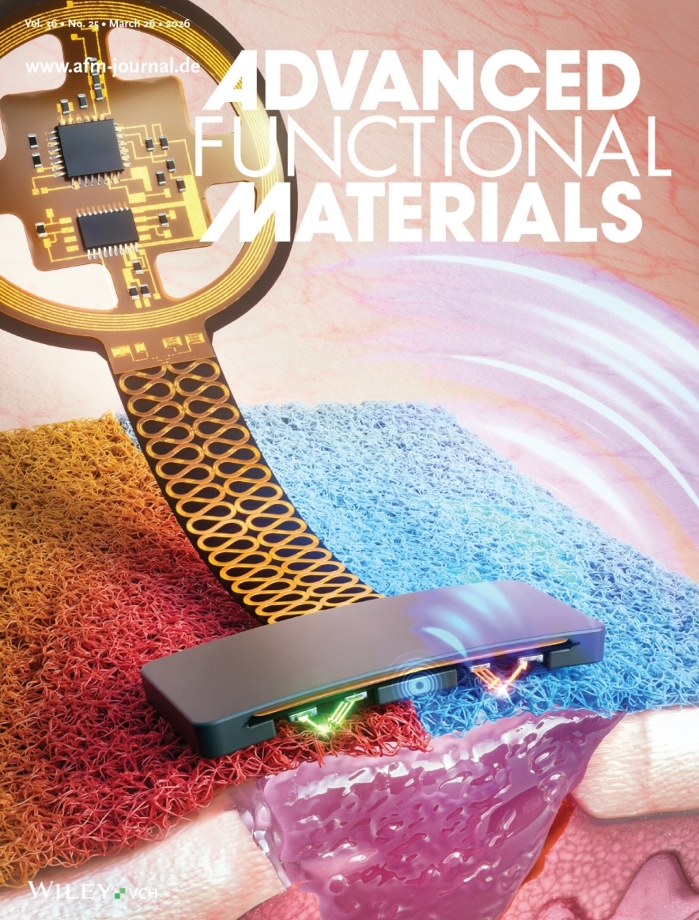

Professor Ha Ji-hwan's Research Team at Hanbat National University Tackles Diabetes and Diabetic Foot with Colorimetric Monitoring... Developing the World's First Wearable Colorimetric Diabetes Sensor
- Joint research achievement of Hanbat National University, KAIST, Korea Institute of Machinery and Materials, and California Institute of Technology (Caltech)
- Developing wireless and battery-free multi-modal optoelectronic sensor overcoming limitations of colorimetric monitoring method
- Proving the possibility of monitoring severe complications such as diabetic diseases and foot ulcers (diabetic foot) for the first time in the world through precise color analysis of changes in glucose and pH concentrations
- Succeeding in real-time continuous monitoring only with smartphone wireless communication... expected as a next-generation non-invasive diabetes management platform
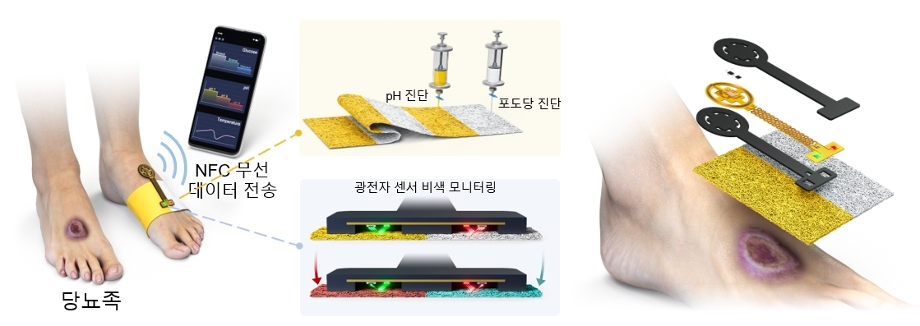
□ Hanbat National University (President Oh Yong-jun) announced on the 14th that Professor Ha Ji-hwan's research team at the Department of Mechanical Engineering, through joint research with teams from KAIST, Korea Institute of Machinery and Materials, and California Institute of Technology (Caltech), has developed the world's first 'wireless and battery-free multi-modal optoelectronic wearable sensor' capable of monitoring severe complications such as diabetes and diabetic foot in real-time through colorimetric monitoring (color change analysis) of sweat without drawing blood.
○ This research was led by Professor Ha Ji-hwan of the Department of Mechanical Engineering at Hanbat National University and Dr. Cho Seok-ju of the Department of Mechanical Engineering at KAIST as co-first authors, and yielded world-class convergence research results with the joint participation of KAIST Endowed Chair Professor Park In-kyu, Principal Researcher Jeong Jun-ho of the Nano-Lithography Research Lab at the Korea Institute of Machinery and Materials, and Professor Wei Gao's team at the California Institute of Technology.
□ Conventional sweat-based colorimetric sensors could monitor indicators like acidity (pH) but could not monitor glucose, an indicator of diabetes. Since they required photographing and analyzing the colors that change according to the components with a smartphone camera, they had large errors depending on ambient lighting (brightness, shadows) and could not perform continuous monitoring.
○ In particular, there were clear technical limitations in accurately reading the changes in glucose or pH concentrations of diabetic patients at a medical level.
□ This research is evaluated as an innovative achievement in that it successfully monitored the progress of diabetic diseases and signs of fatal complications such as diabetic foot (diabetic foot ulcer) non-invasively for the first time in the world using the colorimetric monitoring method.
○ The rise in glucose levels and the collapse of skin pH balance in the affected area of the diabetic foot can be tracked and observed 24 hours a day with a single colorimetric cloth in the form of a wound dressing and an optoelectronic sensor, opening the way to issue early warnings and prevent the risk of diabetic foot, which can lead to tissue necrosis.
○ It operates without a battery simply by bringing a smartphone close to the sensor, and the measured data of multiple biomarkers (glucose, pH, body temperature, etc.) is transmitted in real-time, allowing patients and medical staff to immediately monitor the condition.
□ Professor Ha Ji-hwan of the Department of Mechanical Engineering at Hanbat National University emphasized, "The research, which started to alleviate the pain of diabetic patients who have to prick their fingers with a needle every day, has led to securing original technology capable of preemptively monitoring even fatal diabetic foot complications." He added, "The newly developed colorimetric monitoring-based optoelectronic sensor will become a core technology leading the customized bloodless health monitoring market for various chronic diseases as well as diabetes in the future.“
□ The results of this research were officially published in 'Advanced Functional Materials (Impact Factor 19.0, Top 4.5% in JCR)', a top-tier international academic journal in the field of materials science, and selected as the front cover paper. (Paper Title: Wireless, Battery-Free, Optoelectronic, Multi-Modal Sensor Integrated With Colorimetric Dressing for Diabetic Ulcer Management)
□ Meanwhile, this research was conducted with the support of the Mid-career Researcher Program and Alchemist Project of the National Research Foundation of Korea (NRF) funded by the Ministry of Science and ICT, and the Daejeon RISE Project funded by the Ministry of Education and Daejeon Metropolitan City in 2025.
- 다음글 Hanbat National University Professor Kim Jung-hwan’s Team Identifies Principle of Enhancing Oxide Semiconductor Performance through Oxygen Pressure Control 2026-06-15
- 이전글 Hanbat National University Ranks 7th Globally in Entrepreneurial Culture and Ecosystem Category of 2026 WURI World University Rankings for Innovation 2026-05-13