HANBAT People
Creative Convergence Undergraduate Student Cho Yoon-seo Wins Outstanding Paper Award at 2026 KSAS Aerospace Electronics Symposium
작성자기획과 조회수21 등록일2026-07-06
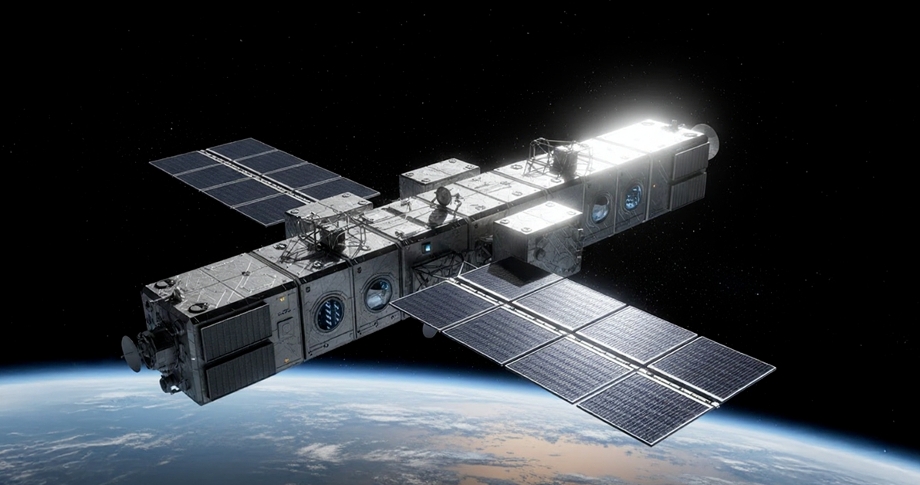
- Proving undergraduate research capabilities through satellite electrical system protection technology for space AI data centers
- Proposing practical analog circuit design technology applicable to actual satellite systems
□ Hanbat National University (President Oh Yong-jun) announced that Cho Yoon-seo, a 4th-year student in the Department of Creative Convergence, won the Outstanding Paper Award at the '2026 Korean Society for Aeronautical and Space Sciences Aerospace Electronics Symposium' on the 2nd.
○ Student Cho Yoon-seo presented a research paper titled 'FPGA Independent Latching Current Limiter for Multichannel Circuit Protection of Space AI Data Centers', which carries great significance as a 4th year undergraduate student received an outstanding paper award at a specialized academic conference in aerospace electronics.
○ In particular, it draws attention as a case where an undergraduate student conducted research considering actual satellite system applications in the high difficulty space avionics field—such as satellite electronic systems, space AI data centers, and analog circuit design technology for fault management—and had the results recognized by an academic society.
□ The award winning paper addresses circuit protection technology to respond to overcurrent, short circuit, and abnormal load conditions that can occur in multichannel electrical systems of space AI data center satellites.
○ Because space AI data centers must perform high performance-computation and large-capacity data processing in orbit, technology to stably operate multiple power channels and quickly protect circuits when failures occur is essential.
□ The technology proposed by student Cho Yoon-seo is based on a latching current limiting structure—a device capable of maintaining circuit status even when power is cut off—without relying on Field Programmable Gate Arrays (FPGA), which are semiconductor devices whose internal circuits can be reconfigured in the field.
○ In previously developed Korean satellites, there have been cases where FPGA control circuits were applied to implement multichannel load protection and current limiting functions, and this method has been utilized as a highly reliable structure securing satellite operational heritage.
○ However, FPGAs can account for a high proportion of component unit costs and design complexity during the development of satellite onboard units, which can become a cost burden factor in the development process of multichannel power distribution units.
○ Taking note of this point, this study is characterized by implementing latching cutoff and load protection functions previously provided by FPGA current limiting circuits on an analog circuit foundation, thereby securing the same level of protection performance without an FPGA.
○ In particular, compared to FPGA current limiting circuits applied to previously developed domestic satellites that have operational heritage, it is evaluated as practical technology that can simultaneously achieve unit cost reduction, design simplification, and reliability assurance in actual satellite electrical system development by reducing the use of expensive FPGAs while securing multichannel circuit protection and fault response capabilities.
○ Student Cho Yoon-seo said, "It is very meaningful that the research I conducted as a member of the Satellite Electronics and Energy Systems Laboratory since the winter break of my sophomore year received high praise," adding, "I want to continue researching satellite electronic systems and circuit design technology that can contribute to actual satellite systems in the future."
□ Professor Park Jeong-eon, who advised student Cho Yoon-seo, stated, "Even as an undergraduate, student Cho Yoon-seo has high curiosity and research passion for satellite electronics, to the extent of defining problems of actual satellite systems from early research stages and proposing practical circuit protection technology to solve them," adding, "As majors in related fields are rare, there is great potential to grow into an outstanding talent in satellite electronic systems and circuit design."
○ He further added, "This achievement is an example showing the results of education fostering problem solving convergence engineering talent pursued by the Department of Creative Convergence in the next generation space systems field where electrical, electronics, space, and semiconductor technologies converge."
- 다음글 Professor Cho Jin-gyun Receives Minister of Land, Infrastructure and Transport Commendation at '2026 Mechanical Equipment Day' 2026-07-24
- 이전글 Department of Industrial Design Wins Grand Prize, Excellence Award, and Advisor Award at ‘2026 Spring Student Design Academic Presentation Competition (DSUS)’ 2026-06-23